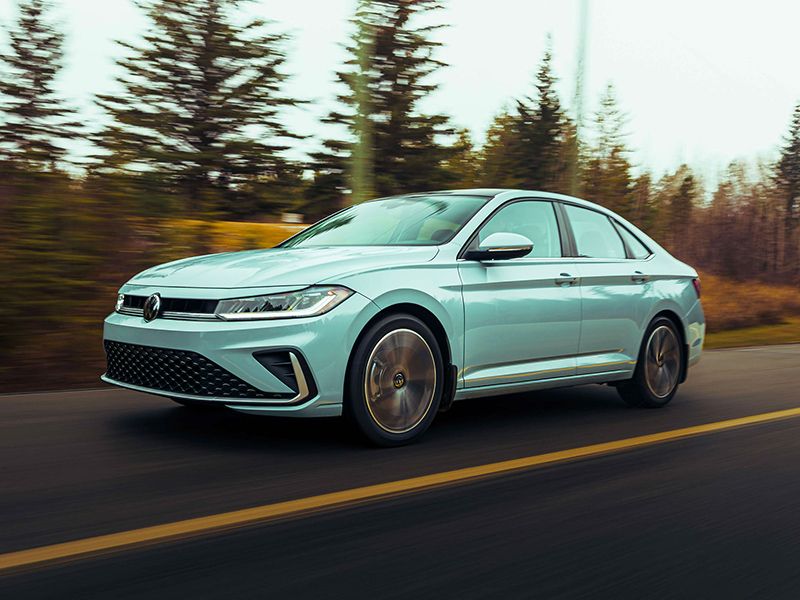
What Makes the 2026 Volkswagen Jetta Different from Japanese and Korean Compact Vehicles?
The compact sedan segment is highly competitive, dominated by offerings from Japanese and Korean manufacturers. The 2026 Volkswagen Jetta stands...
Read more
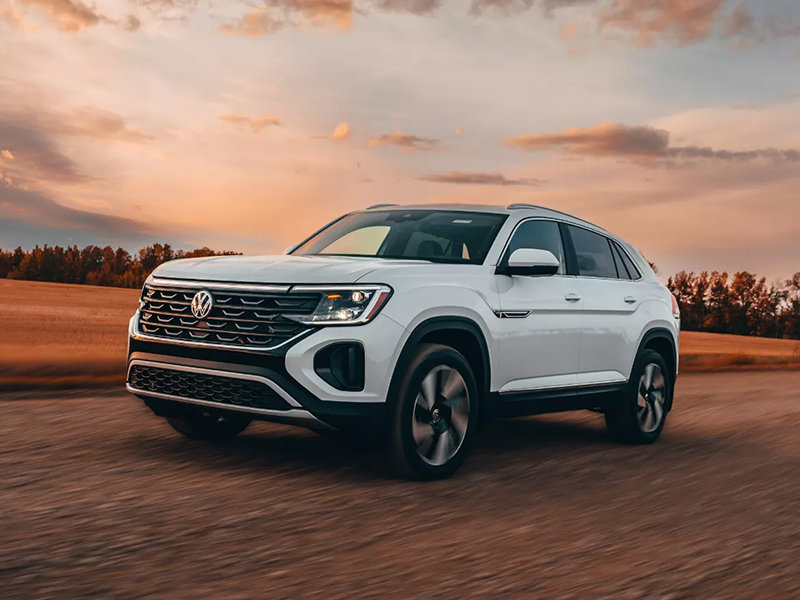
Although they share a name and engineering foundation, the 2026 Volkswagen Atlas and the 2026 Volkswagen Atlas Cross Sport are designed to serve different types of drivers. Both offer strong performance, advanced safety technology, and Volkswagen’s signature refinement, but their layouts, styling, and use cases clearly set them apart.
The most immediate difference between the two models lies in their body design. The Atlas is a traditional three-row SUV, built to accommodate up to seven passengers. It prioritizes interior volume, making it particularly well-suited to larger families or drivers who regularly transport multiple passengers. The third row is designed to be usable for adults, not just occasional seating.
By contrast, the Atlas Cross Sport adopts a sportier, two-row configuration. Eliminating the third row allows for a more aggressive roofline and a sleeker side profile. While it seats five instead of seven, the Cross Sport compensates with a more expansive cargo area behind the second row, appealing to drivers who value storage space over passenger capacity.
The Atlas emphasizes a bold, upright stance that communicates size and confidence. Its proportions are intentionally square, maximizing headroom and visibility while reinforcing its role as a family-oriented SUV. The design prioritizes function, with large doors and a commanding driving position.
The Atlas Cross Sport takes a different approach. Its styling is more athletic, with a lower roofline and sculpted body panels that give it a more dynamic appearance. This model is aimed at drivers who want SUV capability without the visual bulk of a full three-row vehicle.
Inside the Atlas, the cabin layout focuses on accessibility and comfort for all passengers. Multiple USB ports, rear climate controls, and flexible seating configurations make it ideal for long trips with multiple occupants.
The Cross Sport’s interior is more driver-focused. With fewer seats to manage, Volkswagen places greater emphasis on premium materials, sportier trim accents, and cargo versatility. This makes it a strong option for couples, active individuals, or smaller families.
Both vehicles share the same turbocharged powertrain options and are available with Volkswagen’s 4Motion all-wheel drive system. However, the Cross Sport’s slightly lighter weight and shorter length contribute to a more agile feel, particularly in urban environments. The Atlas, while still composed, is tuned for comfort and stability under heavier loads.
Drivers who need maximum seating flexibility will naturally gravitate toward the Atlas. Those who prefer bold styling, extra cargo room, and a more dynamic driving feel may find the Atlas Cross Sport to be the better fit. Ultimately, the difference comes down to how you use your SUV day to day.
What Makes the 2026 Volkswagen Jetta Different from Japanese and Korean Compact Vehicles?
The compact sedan segment is highly competitive, dominated by offerings from Japanese and Korean manufacturers. The 2026 Volkswagen Jetta stands...
Read more
What Are the Benefits of Volkswagen 4Motion All‑Wheel Drive?
Volkswagen’s 4Motion all-wheel drive system is engineered to enhance control, stability, and confidence in a wide range of driving conditions....
Read more
Volkswagen 4MOTION AWD Explained: How It Works, Why It Matters, and Who It’s For
All-wheel drive is no longer a specialty feature reserved for off-road vehicles or extreme conditions. Today, it plays a central role in how modern...
Read morePowered and developed by
